Frightening Flora
October 21, 2024 · Uncategorized
Frightening Flora: Just When You Thought You Were Safe in the Garden…
Written by: Amy Yarger, Senior Director of HorticultureHave you ever heard anyone called “fresh as a daisy” or “shrinking violet”? These similes assume plants are harmless, even passive. Humans rely on plants for our oxygen and much of our food, but most of the time, people don’t pay much attention to them. Instead, they perceive plants as a general green haze over the surface of the land- useful and pretty sometimes, but certainly not very interesting! However, the more scientists learn more about plants, the more we understand that plants have ingenious survival adaptations. Plants aren’t mild wallflowers, sitting quietly while animals try to eat them; they use intricate schemes to ensure their reproduction and devious defenses to protect themselves from herbivores, or plant eaters. Pollination is often presented as a win-win for pollinator and plant, but plants aren’t above using deceit and manipulation to spread their genes.
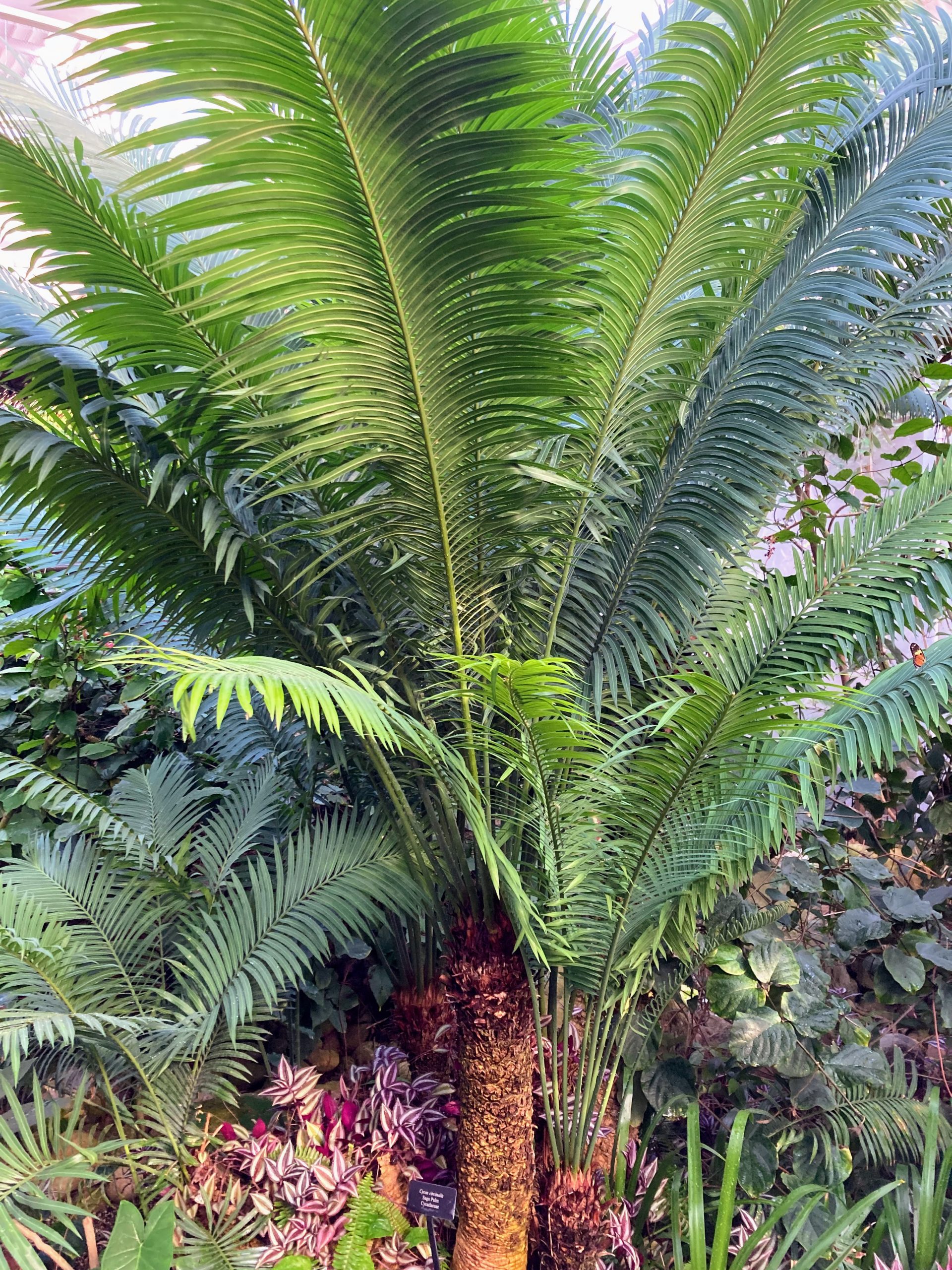
The lip of the orchids in the European genera Ophrys mimics the female of certain ants, bees and wasps (each species lures a different Hymenopteran visitor) through fragrance and appearance. Naive males attempt to mate and get bonked on the head with the pollinia. The mimicry is good enough that males are deceived more than once. The Queen Sago Palm (Cycas circinalis) is originally from southern India but is prized around the world as both a specimen and a landscape plant. But every part of the plant, including leaves and seeds, contain a neurotoxin that, if ingested, may cause symptoms including nausea, uncontrollable body movements, blindness, and death. However, many indigenous people have used this plant as a food plant for centuries, soaking the seeds in water to leech out toxins before pounding into flour. Improper processing of these seeds after World War II led to an outbreak of a variant of ALS (Lou Gehrig’s disease) called “Guam disease”. As food shortages abated, and people were no longer forced to subsist on sago palm, the disease faded away.
Even the humble philodendron, a popular houseplant, contains calcium oxalate in the leaves, which can cause inflammation and difficulty swallowing if eaten. Calcium oxalate crystals are sharp as tiny needles, which can damage cells and tissue. So, the next time you are feeling a bit hungry, it might be wise to give your houseplants a wide pass! But sometimes, it’s not us eating plants…it’s the other way around! Almost 600 species of plants around the world have the ability to lure, capture and digest animal prey. This adaptation is helpful in places where the soil is low in nitrogen. Some, such as the Venus flytrap, have mouth-like modified leaves that are triggered to close by the movement of insects. Others are more passive. Pitcher plants have nectar glands that attract hungry insects – if they slip too far over the edge, they are digested by a slurry of bacteria, enzymes, and water. These and other botanical terrors have inspired scary stories and movies over the years; part of the thrill comes from something that seems so harmless actually harboring deadly danger. We don’t need to regard these living things as monsters, but let’s not underestimate plants. Instead, we can appreciate them not only for what they provide us, but for the incredible adaptations that allow them to survive a dangerous world.