5 Facts You Didn’t Know About Spiders
November 6, 2025 · Blog
Spiders are among one of the most misunderstood animals on our planet. Whether they’re building intricate webs or silently hunting in the trees, these eight-legged little friends play vital roles in all ecosystems around the globe. Yet myths and misconceptions often cloud our perception of these tiny animals. So, let’s unravel the mysteries behind these vital creatures with five facts that just might change the way you think about spiders.
1. No… We don’t eat spiders in our sleep.
You’ve probably heard of the old rumor that people swallow several spiders per year while sleeping. However, there’s actually no scientific evidence supporting this claim. Spiders don’t really want anything to do with us while we are awake or asleep, so try not to lose any sleep over this myth. If that wasn’t enough to convince you, maybe this will. Spiders rely heavily on vibrations to sense the world around them, and the rumbling of our breathing and snoring would feel like an earthquake to them. This whole myth is believed to have originated from an internet hoax in the 1990’s to prove how easily misinformation could spread online, and it appears to have worked a little too well.
2. Spiders are not insects, they are arachnids!
Although spiders are often thought of as insects, they actually belong to a completely different class of animals: Arachnida.
Here’s a simple breakdown between the classes Insect and Arachnida
Insects
– They have three body segments (head, thorax, abdomen), six legs and often wings or antennae
Arachnids –
They have two body segments (a fused cephalothorax and abdomen), eight legs and no antennae (though some have legs modified and used for a sensory function) or wings.


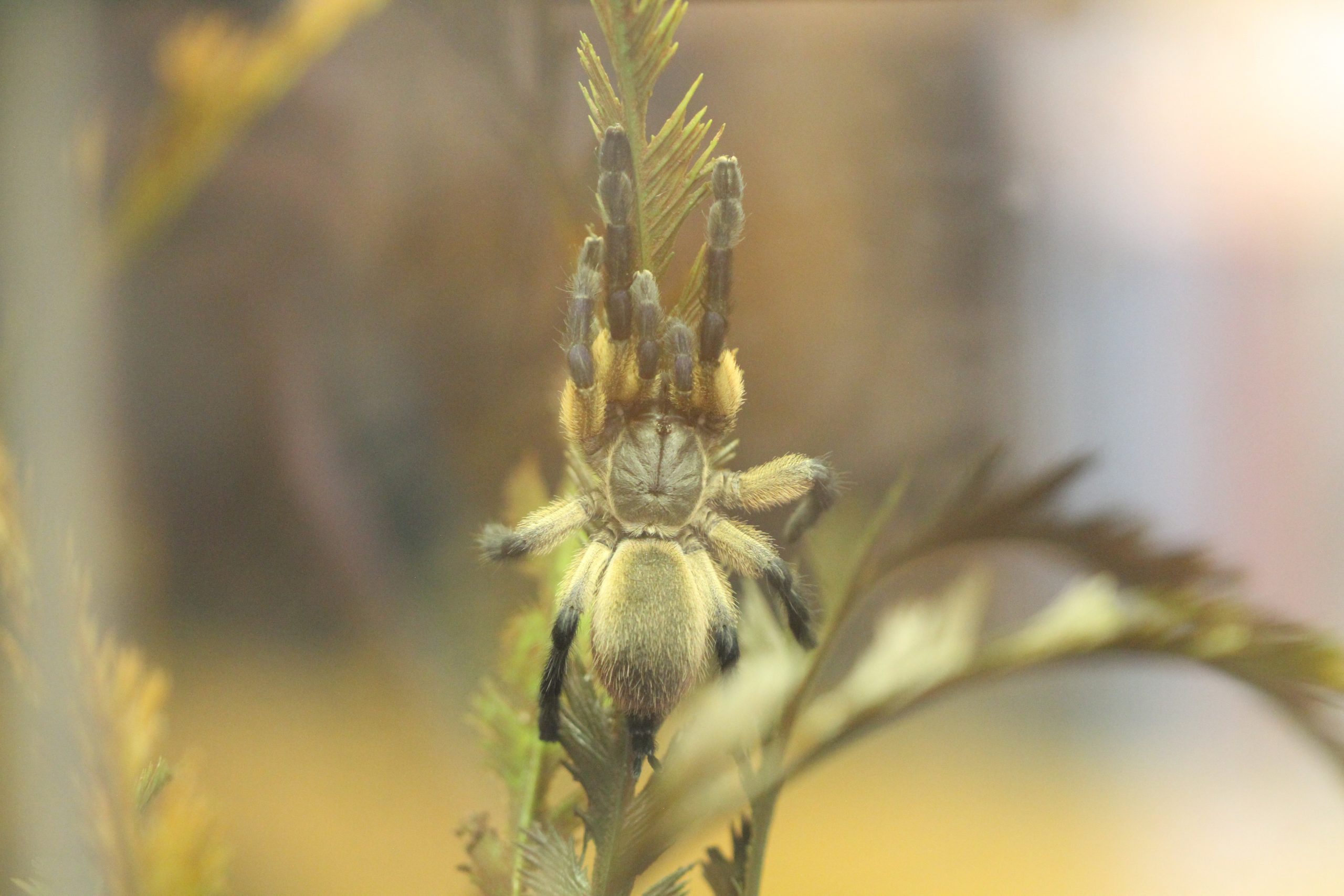
3. There isn’t just one kind of Tarantula. There are thousands (1,177 species of tarantula as of 11/3/2025)!
When people say tarantula, they are actually referring to a whole family of spiders known as Theraphosidae, which includes over 1,000 different species around the world. These species can be found in hundreds of different shapes, sizes, colors, and behaviors based on where they live. Despite their size and appearance, most tarantulas are slow and docile animals that rely on intimidation over aggression. Most tarantulas have alternative defense mechanisms before resorting to a bite. For example, some tarantulas will use urticating hairs which are little barbed hairs that they will flick at their predators to inflict an itchy rash on their predator as a defense mechanism.

4. Daddy Longlegs are not spiders or venomous.
Daddy Longlegs is a name that is used for a few different animals, but most used to refer to the harvestmen. So to put it short, Daddy Longlegs are part of the harvestmen order, not the spider order. Under the class of arachnids, there are several different orders such as mites, scorpions, spiders, and harvestmen to name a few. The difference between spiders and harvestmen is that harvestmen have two body sections that are fused together to look like one, no silk or venom glands and two eyes opposed to spiders which have two body segments, silk and venom glands with six eyes. Unlike spiders, harvestmen feed mostly on decaying plants and organisms, but will also prey on smaller insects as well. They are peaceful and harmless omnivores that mostly scavenge, but also help control small insect populations.


5. Approximately 0.05% of all spiders are harmful to humans.
With more than 50,000 species of spiders estimated worldwide, there are only about 30 spiders that have actually been known to possess venom potent enough to cause medically significant reactions in humans. Spiders understand that biting humans is a waste of venom rather than saving it for venom. Even spiders that are considered “dangerous” like the black widow, tend to avoid biting humans unless it is a last resort for self-defense. In the end, spiders are much more beneficial to humans as important pest controllers keeping insect populations in check both indoors and outdoors.
Written by: Carter Chen